Best Logistics Intelligence Software for E-Commerce (2026)


Last updated:

When you’re shipping thousands of parcels a month across multiple carriers, you already have all the performance data you need. But it’s scattered across carrier portals, weekly exports, and inboxes nobody has time to dig into. By the time you find out a carrier is underperforming, your CS team is already flagging it. Logistics intelligence software fixes that: it brings carrier performance, parcel risk, and invoice accuracy into one place your team can actually act on.
This guide compares the 8 best logistics intelligence software tools available in 2026, from enterprise platforms that cover the full delivery journey to specialist tools focused on carrier cost recovery and invoice auditing.
The top 8 logistics intelligence software tools at a glance
Tool | Best for | Pricing model |
Sendcloud Shipping Intelligence | European enterprise retailers managing multiple carriers | Custom |
SiftedAI | Mid-market US retailers optimizing UPS/FedEx parcel spend | Tiered SaaS |
Reveel | Enterprise US retailers auditing carrier contracts | Custom |
Lojistic | Small to mid-market businesses wanting a free entry point | Free + paid add-ons |
LateShipment.com | E-commerce brands wanting delivery experience management and refund recovery | Per shipment |
Parcel Perform | Global e-commerce brands prioritizing AI-driven delivery experience | Custom |
ShipScience | E-commerce businesses automating parcel auditing and cost control | From $1,565/mo |
AuditShipment.com | SMBs focused on recovering carrier billing errors | Free up to 50 packages |
Here is a closer look at what each tool does, who it is built for, and what it costs.
Best 8 logistics intelligence software (2026)
The tools below cover a range of use cases: from full-stack carrier intelligence platforms to specialist invoice auditing tools. So there is likely an option here that fits your setup, whatever it looks like.
Full disclaimer: we created this list and Sendcloud is on it. But every tool here was evaluated on the same criteria: feature depth, carrier coverage, integration options, and publicly available pricing. We then ranked each tool based on what it actually does best. If you prefer an independent view on Sendcloud specifically, you can check what other e-commerce teams are saying on G2 and Trustpilot.
Below you’ll find a breakdown of the 8 strongest options available in 2026, covering everything from European multi-carrier operations to US parcel spend optimization.
1. Sendcloud: Best for multi-carrier European e-commerce
Sendcloud (hey, that’s us 👋) is built on Europe’s largest dataset of shipping events, giving e-commerce teams full visibility into carrier performance, parcel risk, and invoice accuracy across every carrier they use. Unlike most tools on this list, it connects directly to live shipping operations rather than auditing invoices retrospectively.
Two acquisitions have added real depth to that: Tracey in 2023 for AI-powered predictive parcel monitoring and carrier benchmarking, and Lox in late 2024 for automated delivery issue resolution. This makes it one of the most complete logistics intelligence platforms available for European e-commerce.
Key features:
Carrier performance benchmarking that compares delivery rates, transit times and reliability across all your carriers in one standardized view
Predictive parcel monitoring that flags at-risk shipments before customers contact you, using delivery models built on Europe’s largest shipping events dataset and helping reduce WISMO calls by 30 to 50%
Carrier contract audit that automatically verifies invoices and catches overbilling and discrepancies across all carrier agreements
Automated customer and carrier communication in case of delayed shipments or damaged parcels.
“Sendcloud gives us hard data on volume, performance, and costs. This strengthens our position during carrier negotiations.” - Guus van Nunen, COO of XXL Nutrition
Best for: E-commerce brands shipping with multiple carriers across European markets, especially teams handling 10,000+ parcels per month where carrier benchmarking and proactive exception management directly affect cost and customer satisfaction.
Pricing: Custom pricing based on business setup or custom tech stack
2. SiftedAI: Best for mid-market US-based brands
SiftedAI is a parcel spend intelligence platform designed to help US shippers analyze carrier costs, identify contract gaps, and model the impact of operational changes on shipping spend. It uses AI to surface cost-saving opportunities that are typically buried in raw carrier data.
Key features:
Parcel spend analytics that continuously monitors shipping costs and carrier performance, with alerts when spend patterns shift
AI scenario modeling that assesses the cost impact of changing package dimensions, distribution centers, or carrier mix before you commit to operational changes
Rate benchmarking to evaluate and manage carrier agreements against current market rates
Best for: Mid-market US shippers with FedEx and UPS contracts who want data-driven insight into spend efficiency without relying on manual reporting.
Pricing: SaaS model with tiered plans. Pricing available on request.
3. Reveel: Best for spend management
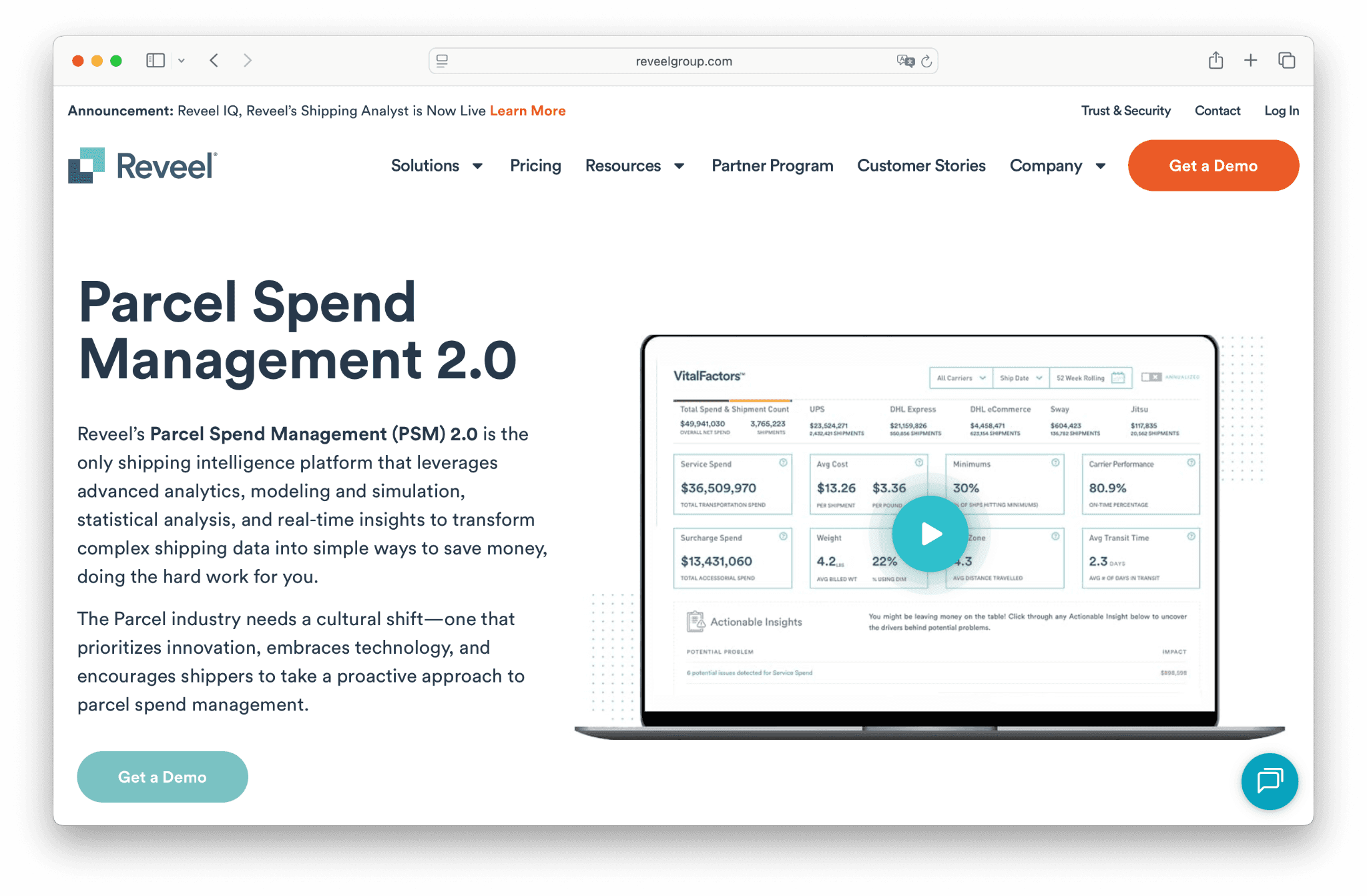
Reveel is an AI-powered parcel optimization platform focused on carrier contract management, invoice auditing, and billing recovery. Its Reveel Peer Index gives enterprise shippers a way to benchmark their shipping costs against comparable businesses, which can be a useful starting point for contract renegotiations.
Key features:
AI contract monitoring that automatically tracks carrier agreement terms, rate changes, and compliance across all active contracts
Invoice audit and recovery that identifies billing overcharges and manages refund claims automatically, without manual invoice review
Reveel Peer Index that benchmarks your shipping rates and performance against companies with similar profiles, giving procurement teams third-party data for carrier negotiations
Best for: Mid-market and enterprise US shippers managing FedEx and UPS contracts who want automated overcharge recovery combined with competitive benchmarking data.
Pricing: Custom pricing based on shipping volume and contract complexity.
4. Lojistic: Best for small US-based businesses
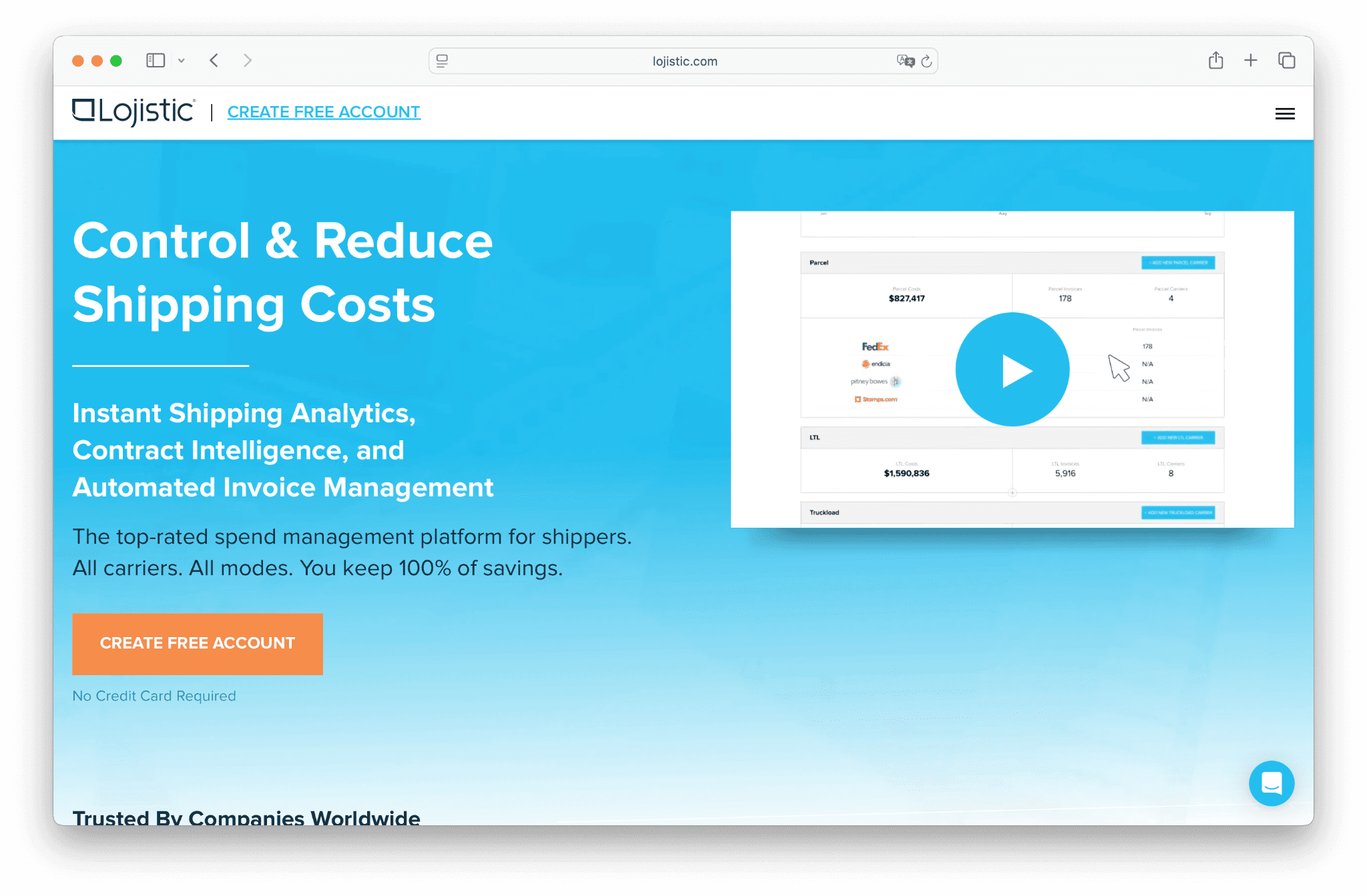
Lojistic is a free parcel spend analytics platform that gives smaller US shippers a low-risk entry point into logistics intelligence. It covers carrier connectivity, historical shipment analysis, and route optimization without requiring an upfront investment.
Key features:
Historical shipment analytics that turns past shipment data into reports surfacing cost patterns and carrier performance trends over time
Carrier Connectors that link directly to carriers for scheduling, route optimization, and rate management without a third-party intermediary
Custom API that integrates with existing systems and feeds analytics reports into your current tooling setup
Best for: Small US-based businesses shipping with FedEx, UPS, or USPS that are looking for shipping cost visibility and carrier management tools without committing to a paid platform.
Pricing: Free core platform with paid add-ons available.
5. LateShipment.com: Best for recovering carrier refunds
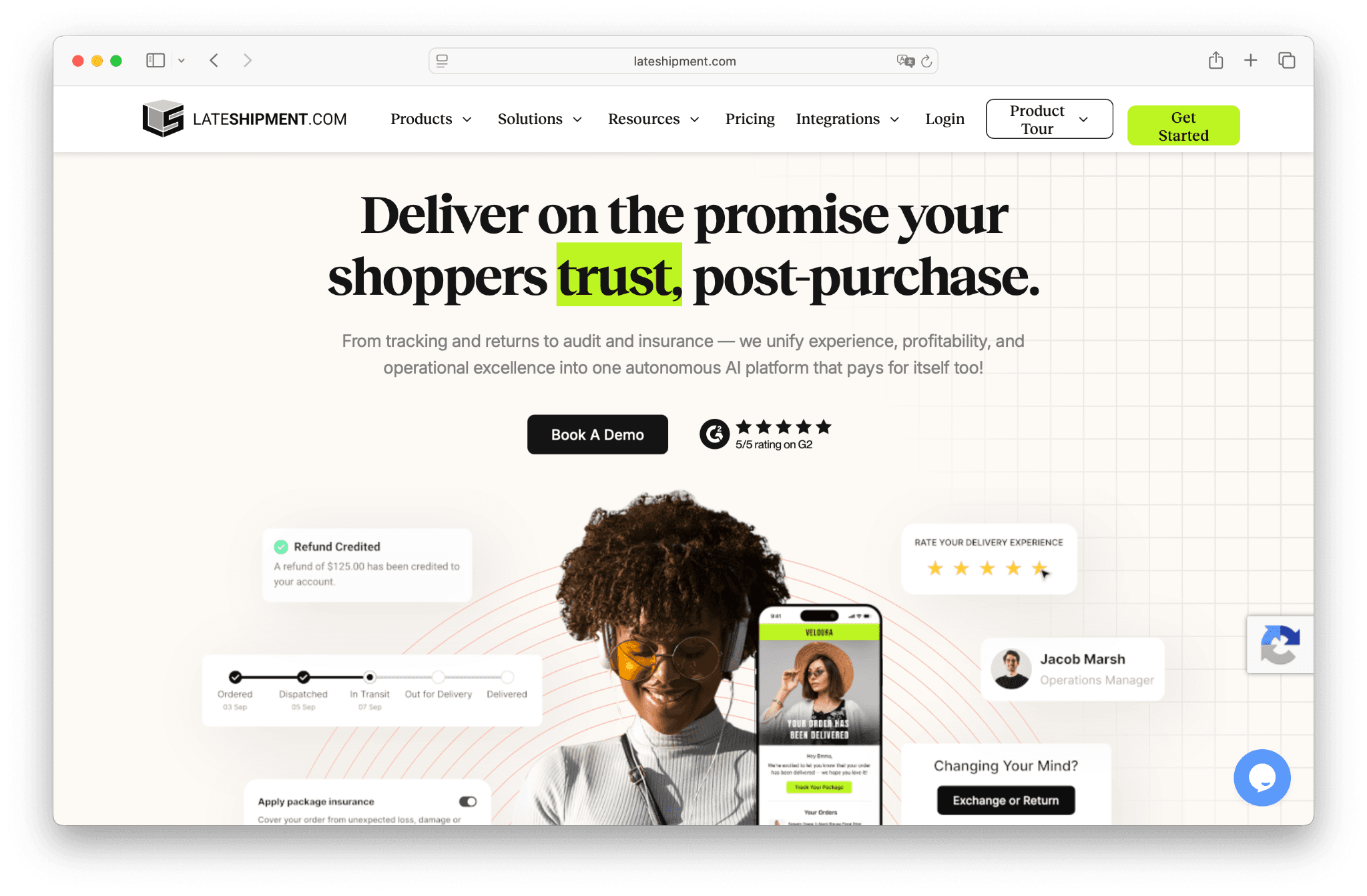
LateShipment.com is a post-purchase intelligence platform that combines automated carrier refund recovery with proactive delivery communications. It covers the full post-shipment journey, from tracking notifications through to claims resolution, without requiring manual intervention from your logistics team.
Key features:
Automated carrier refund recovery that identifies eligible late delivery claims across FedEx, UPS, DHL, and USPS and files them automatically without manual invoice review
Proactive delivery notifications that keep customers informed at every stage of the shipment journey, reducing inbound WISMO contacts
Carrier performance analytics that surface delivery success rates, transit time trends, and exception patterns across your carrier mix
Best for: E-commerce brands shipping with US and global parcel carriers that want to recover refunds on late deliveries and reduce post-purchase customer service load at the same time.
Pricing: Freemium model with paid plans available. Pricing available on request.
6. Parcel Perform: Best for branded post-purchase experience
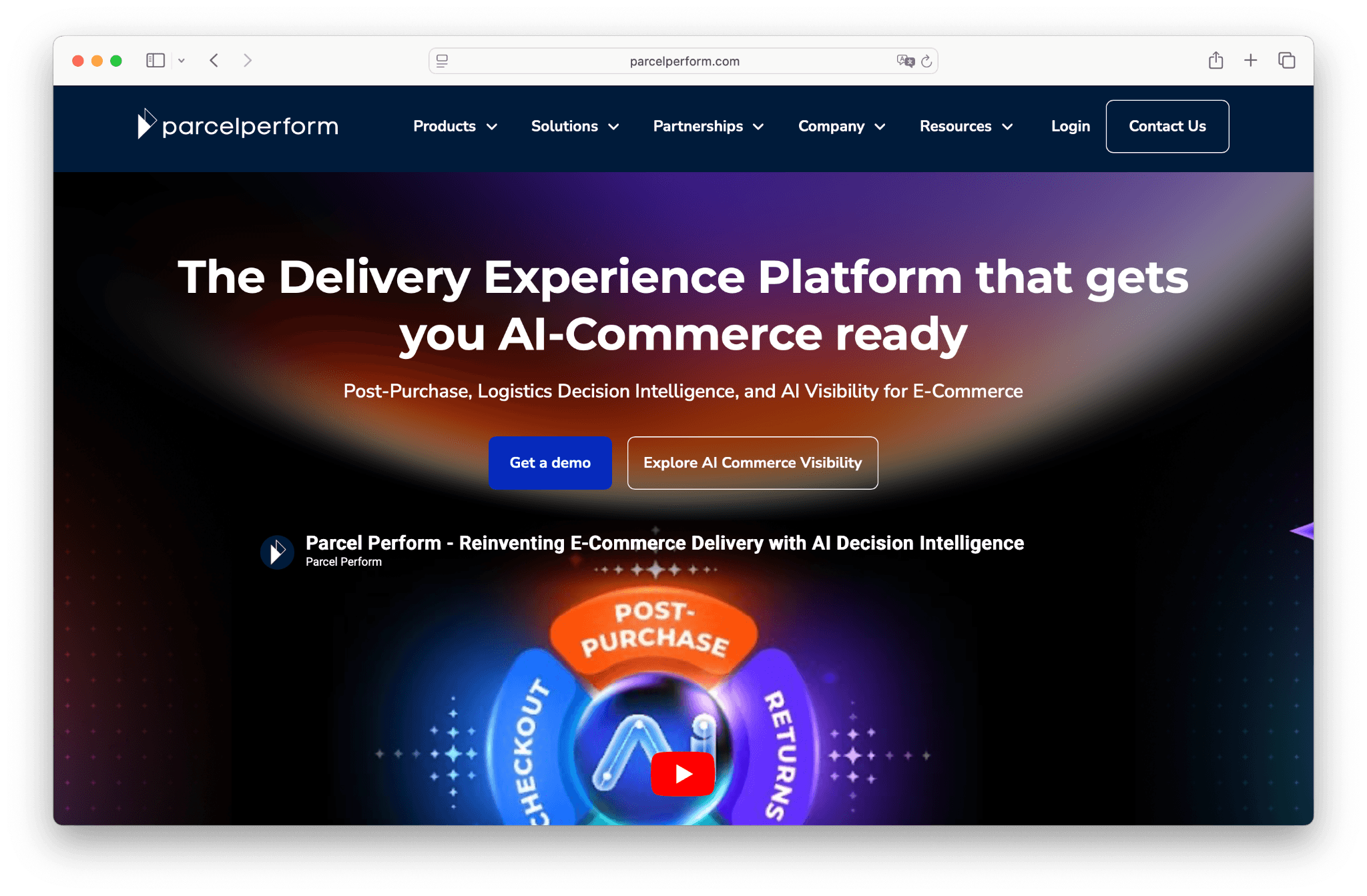
Parcel Perform takes a different angle on logistics intelligence: instead of surfacing data for your operations team, it translates carrier performance into what customers actually experience between order and delivery. It uses AI-driven delivery predictions and exception tracking to manage both what your team sees and what your buyers feel.
Key features:
Branded tracking pages and notifications across 900+ carrier integrations, delivered in the customer’s local language
AI-powered EDD predictions that generate accurate estimated delivery dates using machine learning on historical carrier data
Delivery analytics dashboard that surfaces carrier performance metrics, exception rates, and on-time delivery trends across all markets
Best for: E-commerce brands with significant cross-border volume that want to improve the customer-facing delivery experience while gaining visibility into carrier performance across multiple regions.
Pricing: Custom pricing based on shipment volume and feature requirements.
7. ShipScience: Best for automating shipping operations
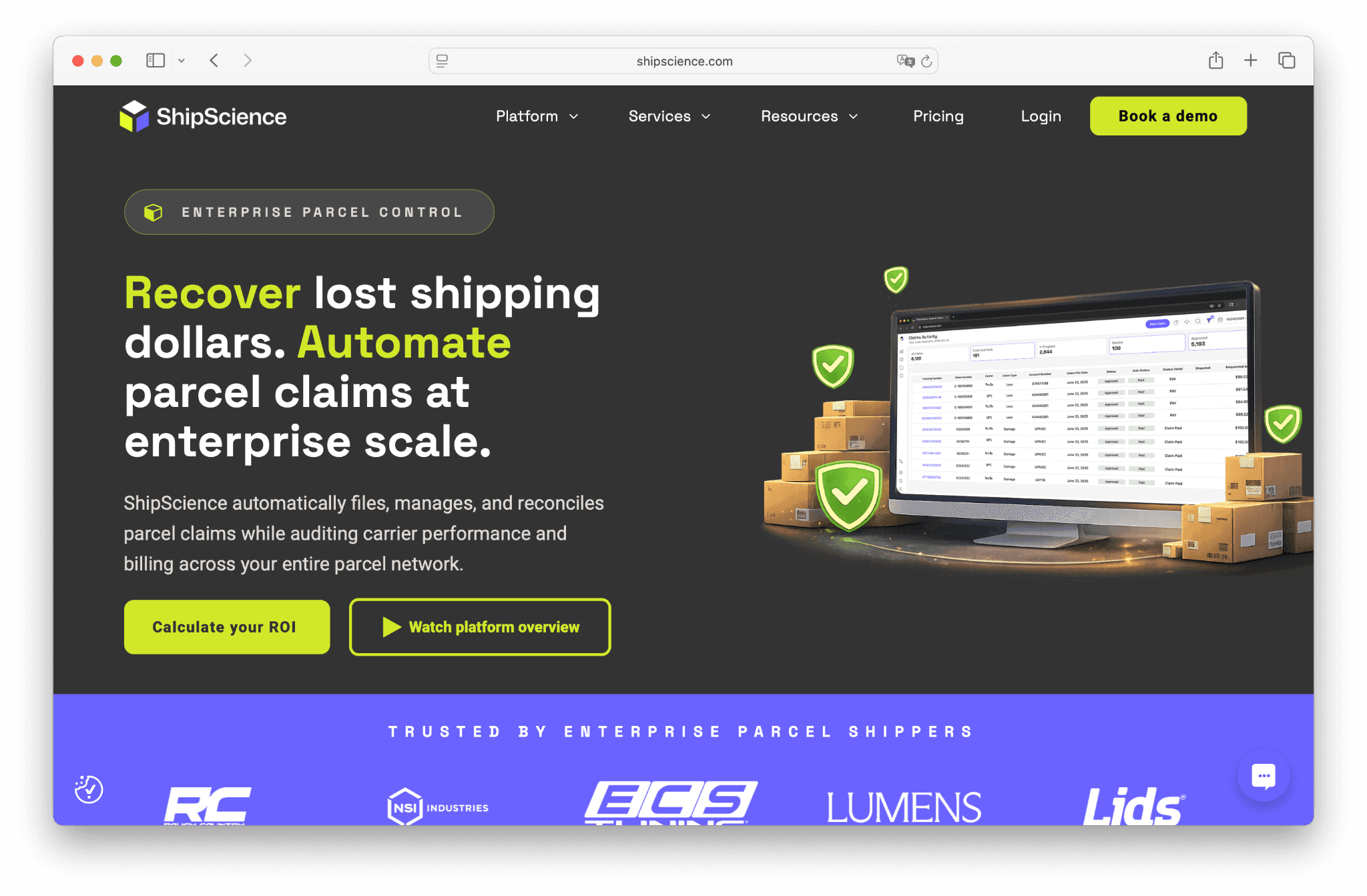
ShipScience is a web-based parcel intelligence platform focused on shipping cost optimization and automated refund recovery. It uses algorithms to detect billing errors and late delivery claims across carrier invoices and consolidates data from multiple shipping accounts into a single view.
Key features:
Automated refund claims that detect eligible late deliveries and billing errors across carrier invoices and file claims automatically, without manual review
Carrier contract benchmarking that compares your negotiated rates against market benchmarks to identify where you are overpaying
Unified shipping dashboard that consolidates data from multiple shipping accounts into a single view for cost and performance tracking
Best for: Enterprise e-commerce businesses that want automated refund recovery and carrier cost benchmarking without significant manual reporting overhead.
Pricing: Custom pricing based on shipping volume.
8. AuditShipment.com: Best for small-to-mid e-commerce teams
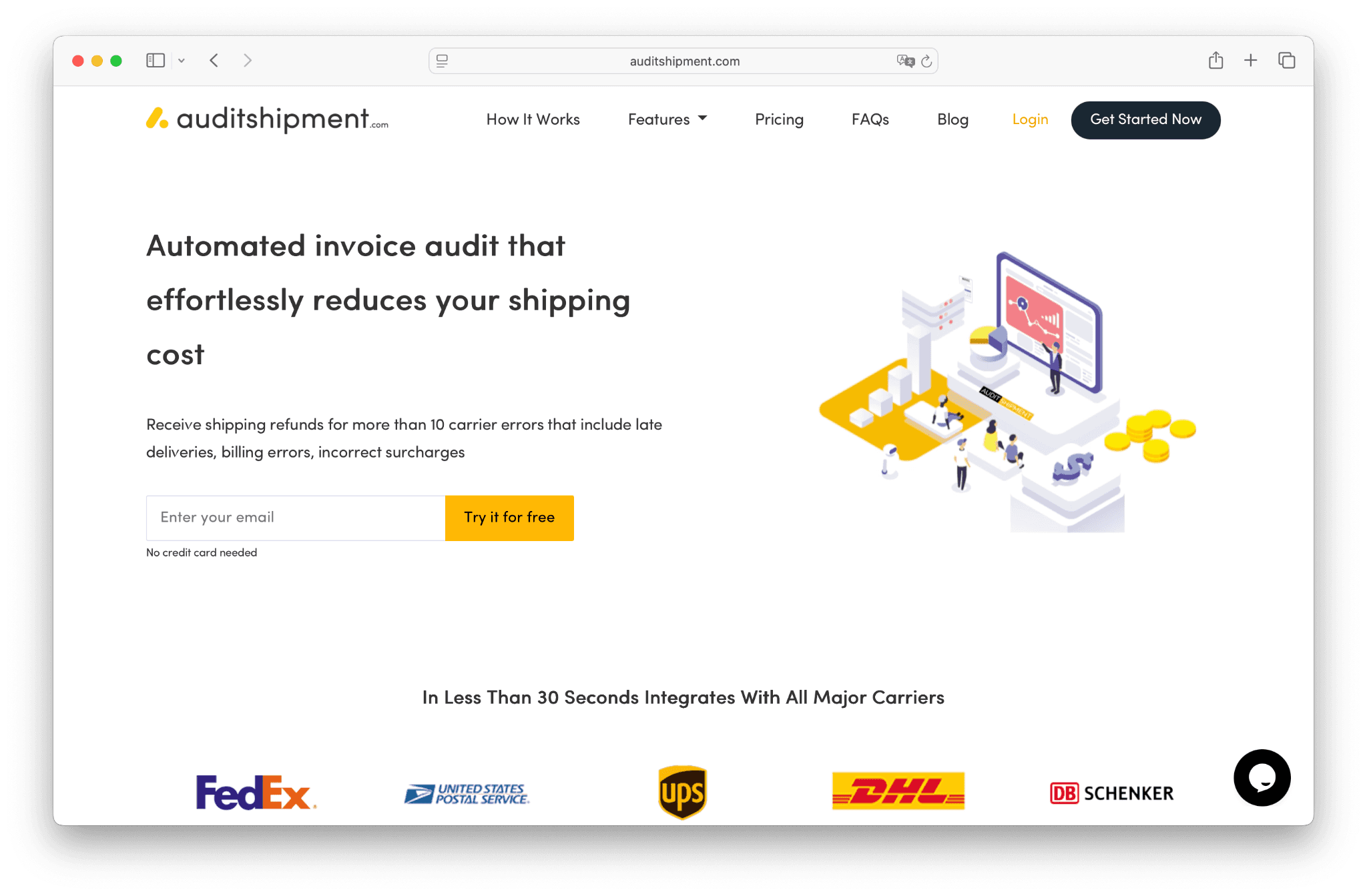
AuditShipment.com is an AI-powered invoice auditing platform that identifies billing errors, surcharges, and delivery exceptions across carrier invoices. Its free entry tier makes it accessible for smaller operations that want to start recovering carrier overcharges without an upfront cost commitment.
Key features:
Automated invoice error detection that identifies surcharges, billing discrepancies, and delivery exceptions across carrier invoices without manual review
Predictive analytics and real-time tracking that flag potential delivery problems before they escalate and consolidate shipment statuses in a unified view
Third-party integrations with logistics, accounting, and POS platforms across a broad range of existing tech stacks
Best for: Small-to-mid-sized e-commerce retailers that need invoice auditing and refund recovery without committing to a paid platform upfront.
Pricing: Free for up to 50 packages per month.
These 3 factors help you choose the right logistics intelligence software
Not every logistics intelligence tool is built for the same problem. So before evaluating platforms, you need to get clear on three things:
1. What is your primary need?
The tools on this list fall into three broad categories: carrier benchmarking and performance visibility (SiftedAI), invoice auditing and refund recovery (Reveel, ShipScience, AuditShipment.com), and post-purchase delivery experience (Parcel Perform, LateShipment.com). Sendcloud combines all three functionalities in a modular platform.
Some platforms combine more than one of these, but most have a clear center of gravity. Match the tool to the problem that’s costing you the most, whether that’s carrier underperformance, billing overcharges, or poor post-purchase customer experience.
2. Which carrier networks do you operate in?
This is the most overlooked factor in the buying decision. Many tools on this list are optimized for US carriers like FedEx, UPS, and USPS. If you are shipping primarily across European markets with regional parcel carriers, your options narrow significantly.
Sendcloud is built specifically for European multi-carrier operations. Parcel Perform and LateShipment.com offer broader global carrier coverage. Check carrier compatibility before shortlisting any platform.
3. How does it connect to your existing stack?
Logistics intelligence only delivers value when it feeds data into the systems your team already uses, such as your CS platform, ERP, WMS, or BI tools. Prioritize platforms with pre-built connectors for your stack, or a documented API.
How to save on your shipping costs using Sendcloud’s logistics intelligence software
Managing multiple carriers across European markets creates a familiar problem: costs are hard to see, performance is hard to compare, and by the time a delivery issue surfaces, the customer has already contacted support.
At Sendcloud, we get this problem first-hand. Our platform was built by merchants who had lived through the chaos of multi-carrier shipping before there was a good way to manage it. So every feature since (including the acquisitions of Tracey and Lox) has been about making sure other teams don’t have to figure it out the hard way. Today, Sendcloud gives logistics and operations teams a single view of carrier performance, invoice accuracy, and parcel risk. And it’s all built on Europe’s largest shipping events dataset.
XXL Nutrition, which ships over 1.3 million parcels per year, uses Sendcloud to optimize delivery methods and cut shipping costs, but also to spot delivery issues they weren’t able to see before.
“Sendcloud gives us more control. What could easily add up to €60,000 a month in unnoticed delivery issues, we now catch within a day or two.”
For teams shipping 10,000+ parcels per month, the combination of carrier benchmarking, predictive monitoring, and automated invoice auditing typically delivers up to 5% in cost savings and a 30 to 50% reduction in WISMO contacts.
Book a free Sendcloud demo to see how Shipping Intelligence performs against your current carrier setup.
FAQs
What is logistics intelligence software?
Logistics intelligence software collects and analyzes shipping data from multiple carriers to give e-commerce teams visibility into carrier performance, costs, and parcel status. Unlike basic tracking tools, it surfaces actionable insights (e.g., which carriers are underperforming, where costs are leaking, and which shipments are at risk) so teams can act before problems escalate.
What is the difference between logistics intelligence software and a transport management system (TMS)?
A TMS manages the operational side of shipping: booking carriers, generating labels, and routing shipments. Logistics intelligence software analyzes the data generated by shipping. Think: carrier performance trends, cost patterns, invoice accuracy, and delivery risk.
Many teams that want to manage shipments use both, with the TMS handling execution and logistics intelligence handling oversight and optimization.
How much does logistics intelligence software cost?
Most enterprise-tier platforms use custom pricing based on shipping volume and feature requirements. Entry-level tools like Lojistic and AuditShipment.com offer free tiers. Platforms that combine benchmarking, predictive monitoring, and invoice auditing in one tool (like Sendcloud) are typically priced on a custom basis tied to the functionalities they need.
Do I need logistics intelligence software if I only use one carrier?
Yes, because if you only use one carrier you never know if there’s a better alternative. Using Shipping Intelligence also allows you to compare your current carrier performance with the rest of the carriers and markets. Additionally, when shipping with one carrier you can still benefit from invoice auditing (to catch billing errors and recover overcharges and predictive parcel monitoring to flag at-risk shipments before customers contact you and resolve them automatically.
How does logistics intelligence software integrate with existing systems?
Most platforms connect via API or pre-built connectors with e-commerce platforms, ERP systems, WMS tools, and customer service software. Sendcloud sends shipping data directly to your BI tools, CS platform, or data warehouse. Check for native connectors with your current stack before committing to a platform.
Which logistics intelligence software is best for European e-commerce brands?
For European e-commerce brands managing multiple carriers, Sendcloud is the strongest option. It is built on Europe’s largest shipping events dataset and covers carrier benchmarking, predictive monitoring, and invoice auditing in one platform. Most US-focused tools (such as SiftedAI, Reveel, Lojistic) have limited coverage for European parcel carrier networks.


Author and researcher
Huib Adriaans is the VP of Enterprise at Sendcloud and the founder of Tracey. With 10+ years in the logistics space, he leverages shipping intelligence and data-driven insights to help merchants reduce "Where is my parcel?" inquiries and build world-class delivery experiences.
How much time can you save on shipping?
Full visibility into every part of your shipping and returns operations
More than 2,600 five star reviews

Share
Recommended for you

Shipping
Integrations
Best Shopify shipping apps: compare features, pricing & automation
Compare the best Shopify shipping apps for automation, carriers, labels, tracking, returns and international shipping. Find the right app for your store.

Shipping Intelligence
Shipping
E-commerce
Best 9 Shipping Data Analytics Software Tools (2026)

E-commerce
Enterprise